
모공각화증, 혹시 나도? 자가진단법부터 효과적인 한의원 치료까지 충청 청주 끗 한의원
11/21/2025
충청 청주 끗 한의원에서 진행하는 모공각화증, 혹시 나도? 자가진단법부터 효과적인 한의원 치료까지 시술 노트입니다.
Keratosis Pilaris Treatment: A Thoughtful Approach

1)Keratosis Pilaris: An Overview
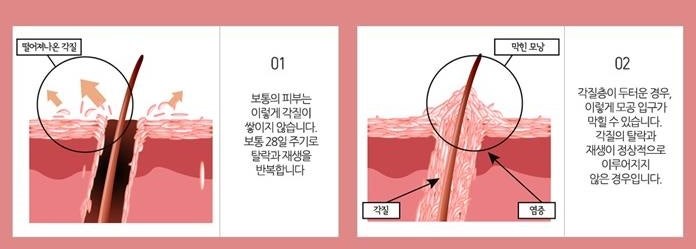
Keratosis Pilaris (KP) is a common skin condition often referred to as "chicken skin" or "bumpy skin." It occurs when hardened keratin builds up and plugs the openings of hair follicles.
As a result, the skin surface feels rough,
Specific areas such as the arms, thighs, and buttocks may present with darkened or small, grain-like bumps when touched.
Key characteristics include:
It is often linked to genetic factors and dry skin types.
The condition involves a complex interplay of insufficient moisture, excessive keratin buildup, micro-inflammation, and hyperpigmentation around the hair follicles.
Effective treatment, therefore, typically goes beyond simple peeling.
Rather, a stepwise approach, addressing keratin → structure → pigmentation/inflammation, can lead to more effective and lasting improvement.
2) Self-Check: Recognizing Keratosis Pilaris
If two or more of the following apply to you, Keratosis Pilaris may be suspected.
The skin feels rough or has small, consistently arranged bumps when touched.
It is primarily observed on areas such as the outer arms, thighs, and buttocks.
After showering, the skin tends to dry out quickly and may become flaky.
Around the hair follicles, dull grayish-brown or slightly reddish spots are visible.
Although scrubbing might temporarily smooth the skin, the bumps tend to reappear within 2 to 3 days.
If you are experiencing similar symptoms,
It is advisable to consult with a specialist for an accurate diagnosis and a personalized, stepwise treatment plan.
3) Kkeut Clinic's Approach to Keratosis Pilaris Treatment
In Keratosis Pilaris treatment, the sequence and planning of procedures are crucial factors influencing the overall outcome.
Kkeut Clinic develops a tailored, stepwise treatment plan, aligning with the pathological progression of 'keratin → structure → pigmentation/inflammation,' rather than merely repeating standard procedures.
After each treatment stage, we conduct consultations to evaluate progress and determine whether to advance to the next step.
If sufficient effects are observed, we proceed to the next stage. If more treatment is beneficial for the current stage, the number of sessions is adjusted to suit individual needs.
The Keratosis Pilaris management plan at Kkeut Clinic follows a 3-step process.
STEP 1. Aladdin Peeling (Spicule + AHA/BHA) — Addressing Surface Keratin Plugs
Primary Focus
The initial goal is to gently clear the surface keratin plugs that obstruct hair follicle openings.
Natural nano-spicule particles reach 0.2-0.5mm into the epidermis, delivering gentle micro-stimulation.
By refining the stratum corneum, responsiveness to Step 2 Fraxel treatment may be enhanced, and skin roughness can be improved.
Key Benefits
A relatively short recovery period is expected.
After the initial session, a reduction in tactile roughness by approximately 20-40% may be observed.
Recommended Interval and Sessions
Every 2 weeks / 2 to 3 sessions
STEP 2. Er:YAG Fraxel — Addressing the 'Protruding Structure' at Hair Follicle Openings
Er:YAG Versus CO2: Key Advantages
CO2 Fraxel procedures involve considerable heat transfer to adjacent tissues, which may increase the risk of erythema and PIH (Post-Inflammatory Hyperpigmentation) following Keratosis Pilaris treatment.
Conversely, Er:YAG (2940nm) exhibits a water absorption rate 10 to 15 times greater than CO2, which allows for notably thinner and more precise epidermal exfoliation,
with a reduced recovery period and less potential for redness.
This approach may be more appropriate for gently smoothing the textured, 'bumpy' appearance of keratosis pilaris.
Er:YAG energy may offer more favorable outcomes in terms of both stability and effectiveness for various forms of keratosis pilaris.
Anticipated Outcomes
The tactile roughness of the skin may see a noticeable reduction, potentially by 50-70%. Individual experiences can vary.
The irregular keratin formations at the follicular openings can be softened.
Pigmentation and redness may show only partial improvement during this phase. Further refinement for these concerns is typically addressed in a subsequent step.
Suggested Interval and Session Count
Approximately 3 sessions, typically spaced 4 weeks apart.
STEP 3. 1064nm Laser Body Toning: Targeting Pigmentation, Micro-inflammation, and Residual Concerns
The Role of Laser Toning in Keratosis Pilaris Management
It can help to alleviate the prevalent grayish-brown or gray discoloration often seen in keratosis pilaris, which stems from increased melanin deposition around hair follicles.
The distinctive photoacoustic effect of laser toning can delicately break down any lingering micro-plugs.
It can mitigate persistent micro-inflammation, which may help to slow the rate of recurrence and optimize the skin for final treatment outcomes.
Key Benefits
This wavelength, 1064nm, is known for its ability to penetrate deeply into various body areas.
It is generally well-tolerated on darker skin tones.
This treatment can be beneficial for keratosis pilaris primarily characterized by pigmentation, such as darkening on the arms and thighs.
Suggested Interval and Session Count
Approximately 10 sessions, typically spaced 1 week apart.
Why Our Keratosis Pilaris Treatment Stands Out
1) The treatment sequence is structured to align with the 'pathological progression' of the condition.
Rather than merely reiterating peeling procedures,
Keratin buildup → Skin Texture → Pigmentation/Inflammation
Our treatment approach addresses keratosis pilaris in a sequence that reverses its typical development.
2) Following Step 1, a consultation is essential to determine progression to the subsequent stage.
Individual patient responses and progress can vary significantly.
After completing each stage, we meticulously review the progress and then tailor the subsequent steps accordingly.
3) Er:YAG-Focused Fractional Laser Protocol Designed for Patient Comfort
Our approach utilizes an Er:YAG (erbium-doped yttrium aluminum garnet) based protocol, as opposed to CO2, which is intended to reduce the occurrence of erythema and post-inflammatory hyperpigmentation (PIH).
4) Integrated Body Toning (1064nm) Combination Therapy
We incorporate a Body Toning 1064 protocol designed to help manage persistent pigmentation and inflammation associated with keratosis pilaris.